Seville, Spain What to see & do in 2 Days
In mid December (2025) my husband and I travelled to the south of Spain to explore the Andalusia region of the country. We have been to Spain before, but away from childhood holidays at the beach and briefly visiting Barcelona and Madrid it was our first experience of a more authentic Spain.
We started our trip in the city of Seville, the capital of Andalusia.
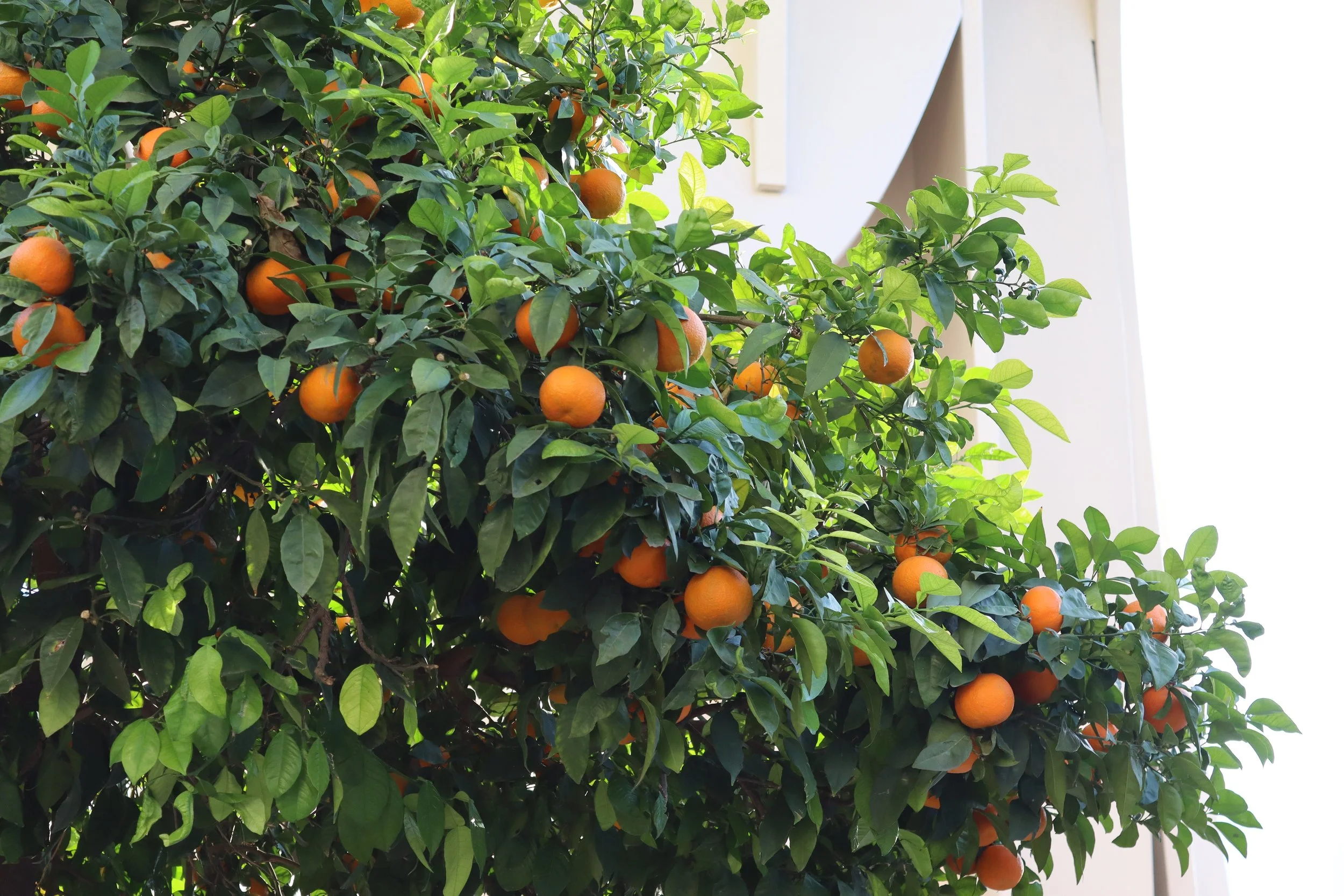
The city is famed for its streets lined with orange trees and ceramic tiles and great food scene. We flew direct from Edinburgh with Ryanair.
For this portion of our trip we dedicated two nights to Seville, and in my opinion for the city itself two days was more than enough time to fully explore.
Where we stayed:
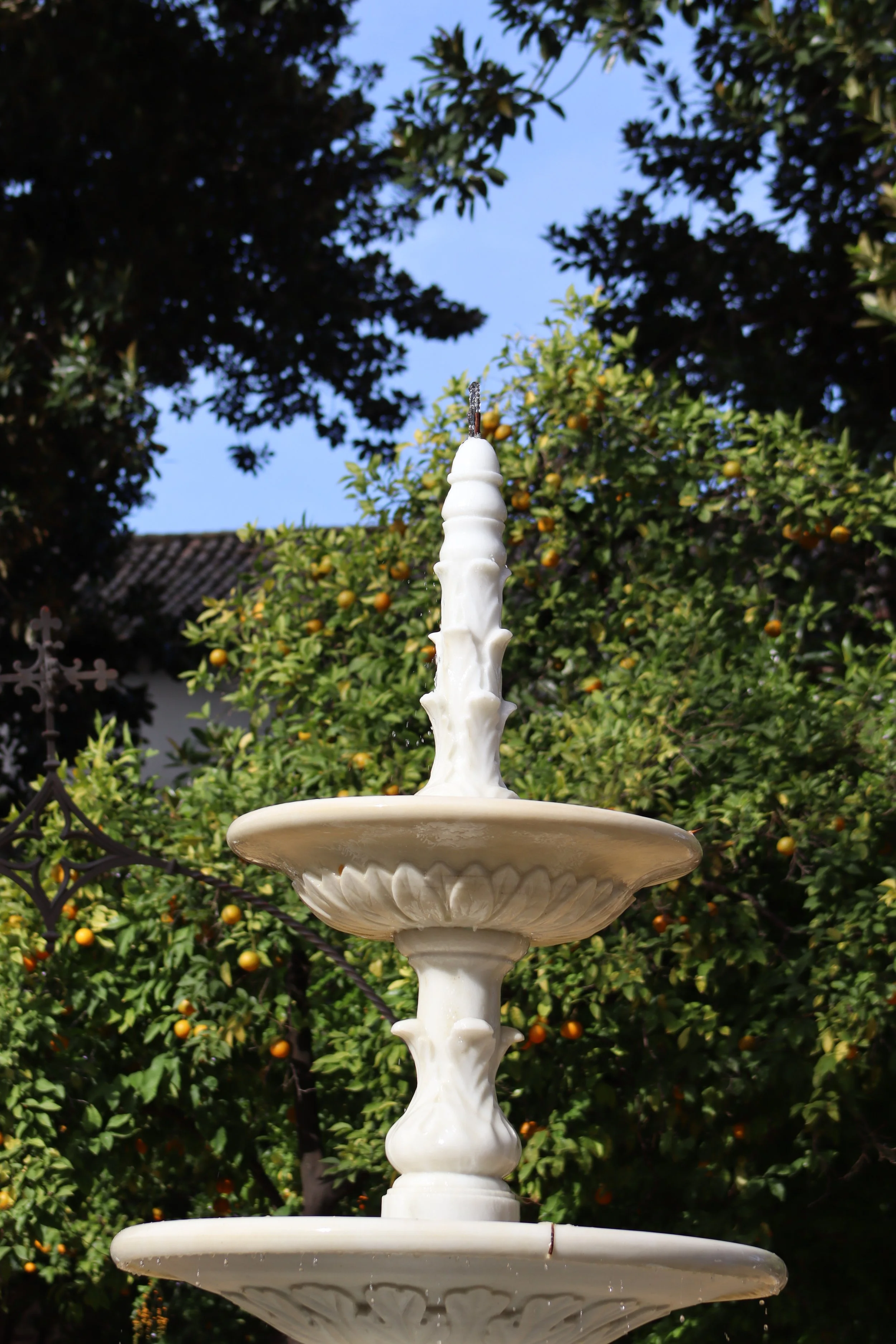
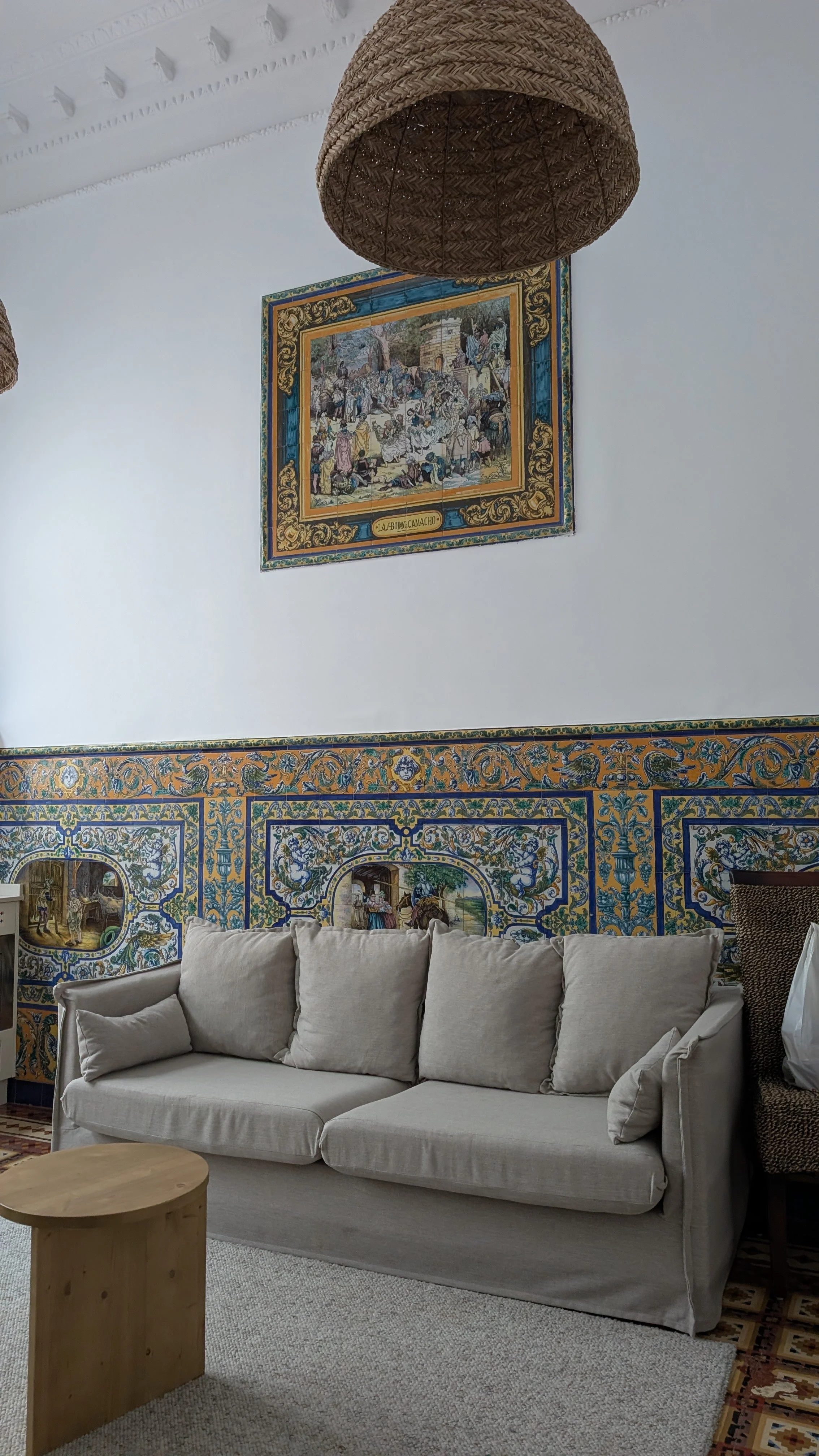
Our airbnb ground floor apartment was set in the heart of Seville, but there was very little noise from the street and I loved the interior courtyard in Mozarabic style. The airbnb was in the bustling Triana neighbourhood which was very close to the river and on every corner there was a place to eat and drink.
There was also a shared rooftop and Jacuzzi tub (we didn’t use it) if needed. It was a very pleasant stay and if you are looking for a wee city break then I can recommend this place.
Airbnb link here:
Things to do in Seville:
Plaza de España
In my opinion it was the number one thing to see in Seville, what's more is it is 100% free to explore. This semi-circular public square was built in 1929 and designed for the Ibero-American exhibition of that year - the exhibition that year was to show off Seville's place in the world for its crafts and industry.
The Plaza itself is huge, to put it in perspective it is the size of five football pitches, so you’ll definitely get your steps in here!
The plaza is set around the Maria-Luisa Park which is also worthy of a walk through. As we were walking towards the square there were street vendors roasting chestnuts and live music performers.
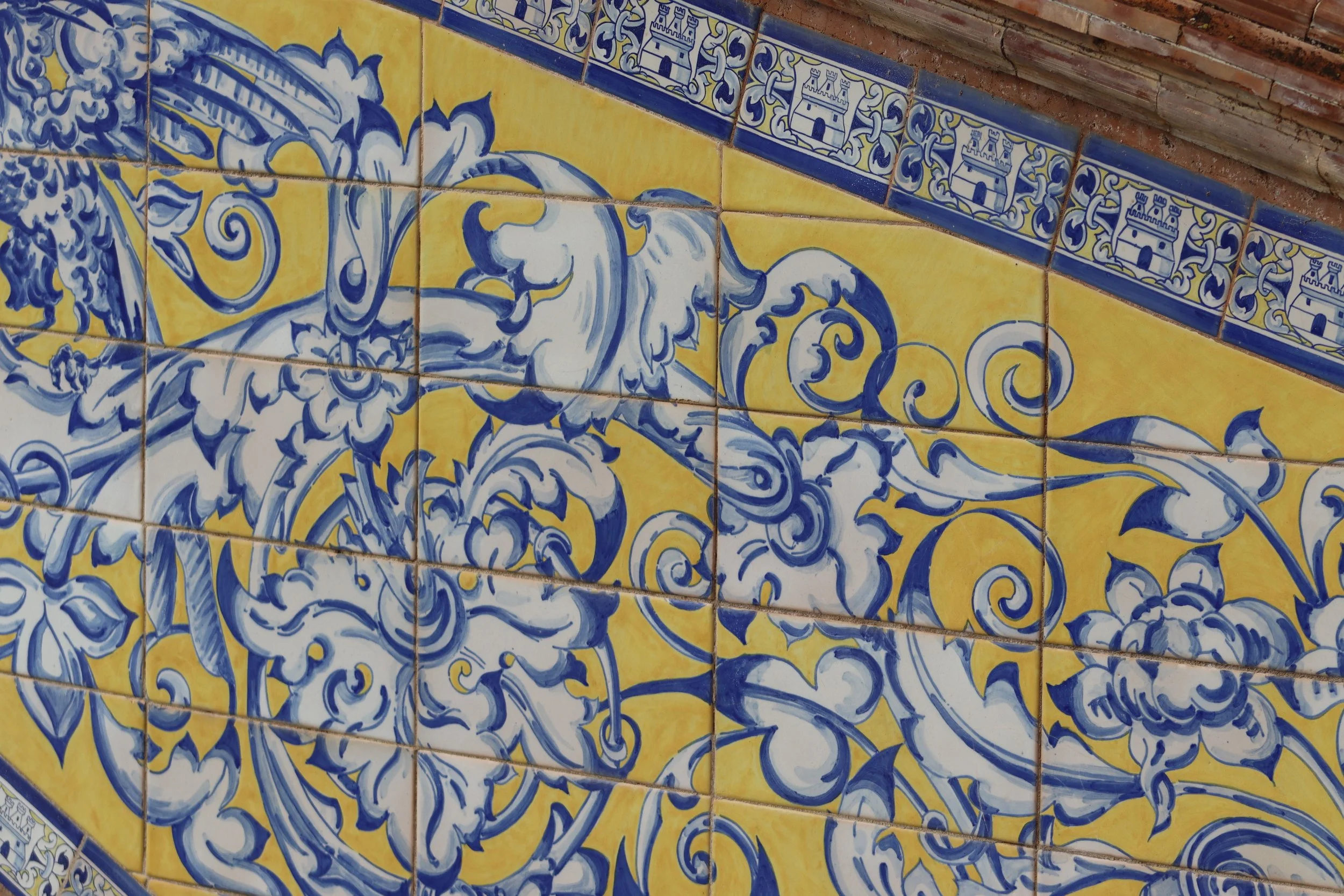
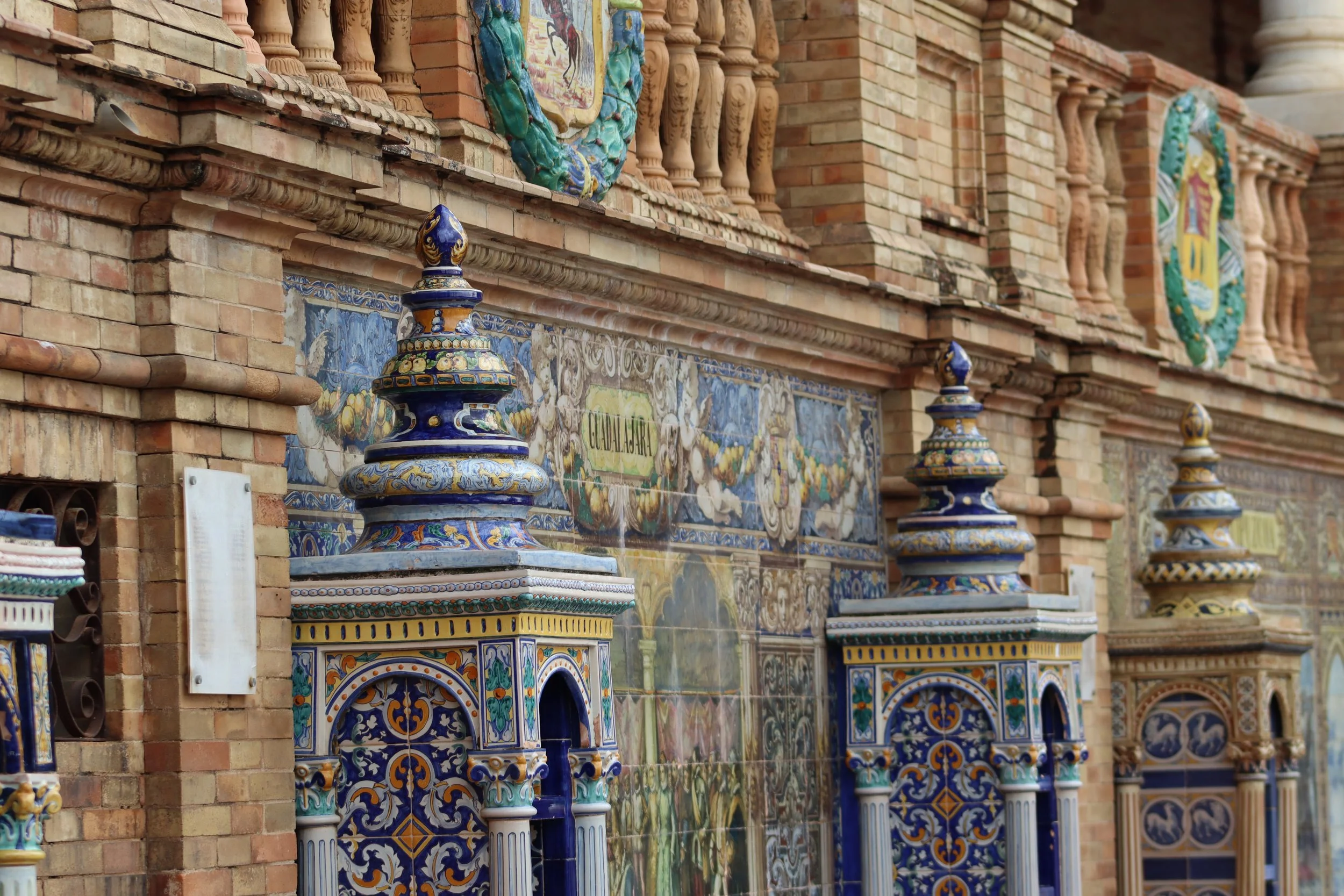
Along the plaza there are 52 tiled frescos and seats that each depict all the 52 different regions of Spain. I loved that each one was different and the craftsmanship of the tiles was impressive. There are over 7000 different colourful ceramic tiles all telling the story of Spain and its history.
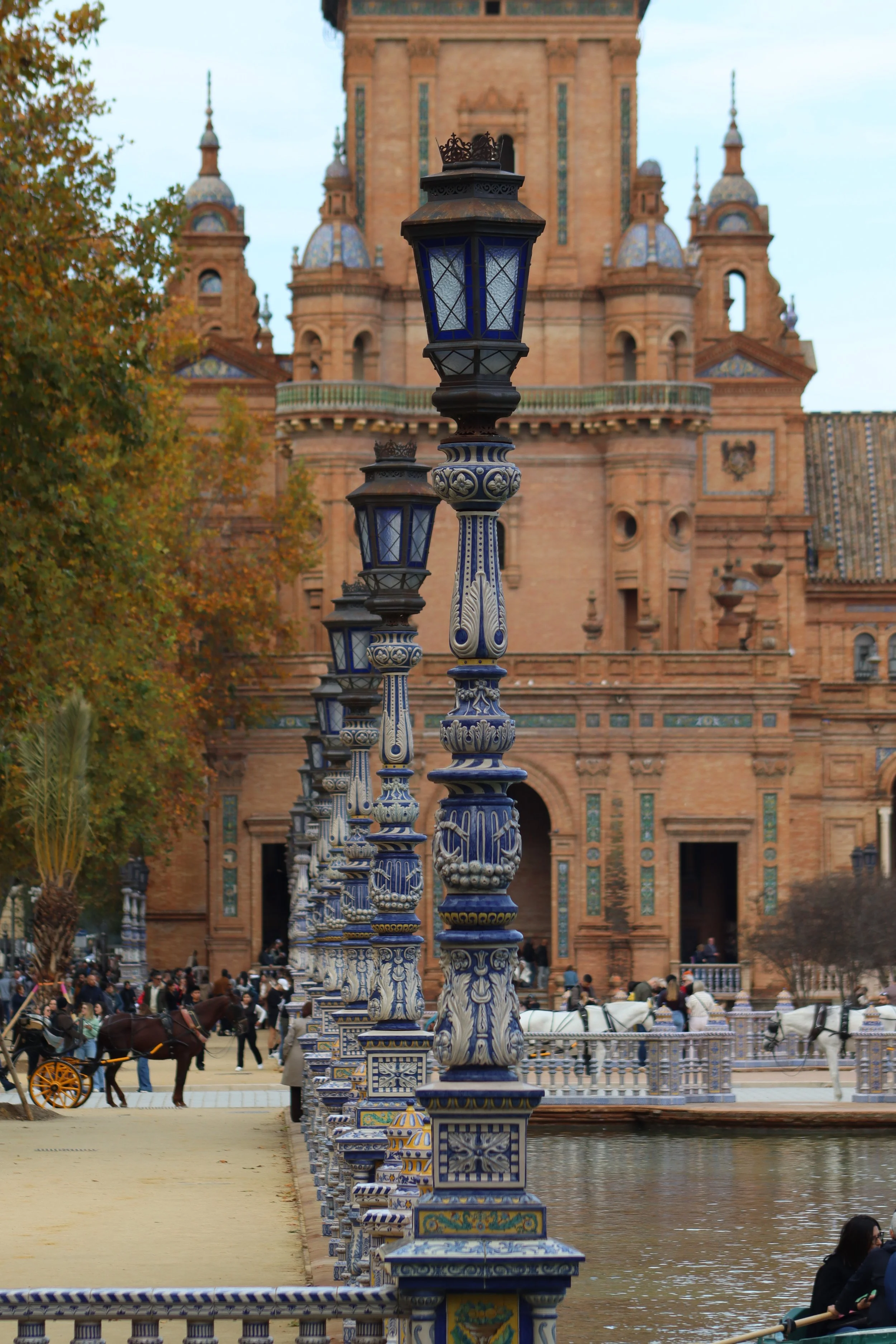
Set in the middle of the square is a large fountain and canal, we were lucky enough to see the canal was filled with water and there were some small rowing boats afloat. The four bridges over the water did remind me of a Venetian style bridge and made for a great place for photographs. Each bridge represents the ancient kingdoms of Spain: Aragon, Castille, Leon and Navarre.
*I had read online in November that the canal was drained of water for cleaning.
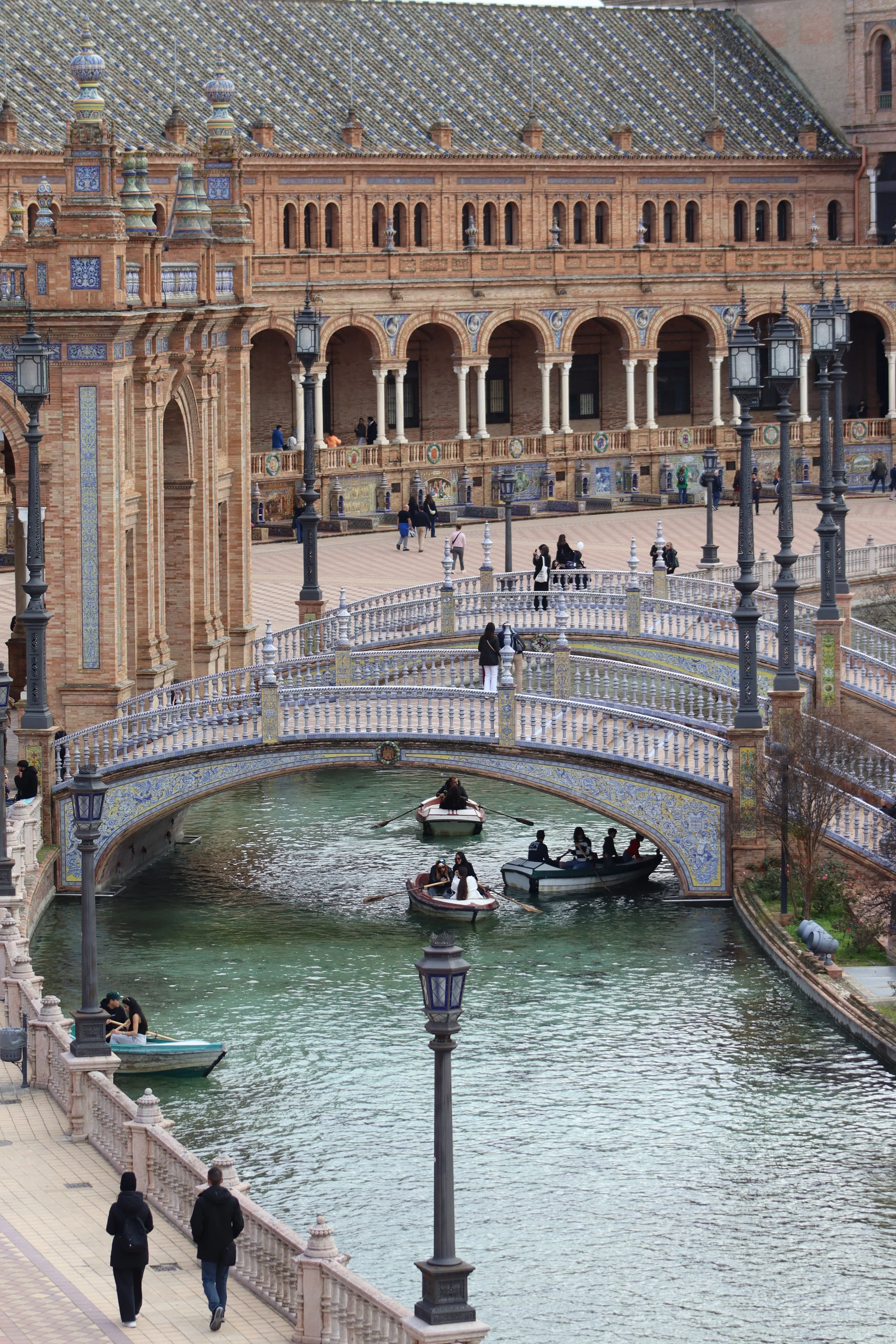
The buildings surrounding the square are mostly governmental, however one was open to the public and we walked up one flight of stairs for a great viewpoint.
The architecture surrounding was a blend of Art Deco and Spanish Renaissance revival and provided such a grand backdrop. There were covered arches along the plaza and I can imagine in the heat of the summer, the shade would be welcome.
Plaza De Espana has been used as a filming location numerous times. Probably the most well known is Star Wars: Episode II “Attack of the Clones” (2002). The plaza was used as the “City of Theed” and background shots during Lawrence of Arabia (1962).
Flamenco Dancing:
Did you know that Flamenco dancing originated in Seville?
Originally flamenco was started in Triana, located across the Guadalquivir River. The original inhabitants of this neighbourhood were largely Roma and Moorish and if you hear the lone voice singing, it can sound a bit like the Muslim call to prayer. The art of Flamenco is very important to Andalusians and in fact, UNESCO granted the dance Intangible Cultural Heritage status.
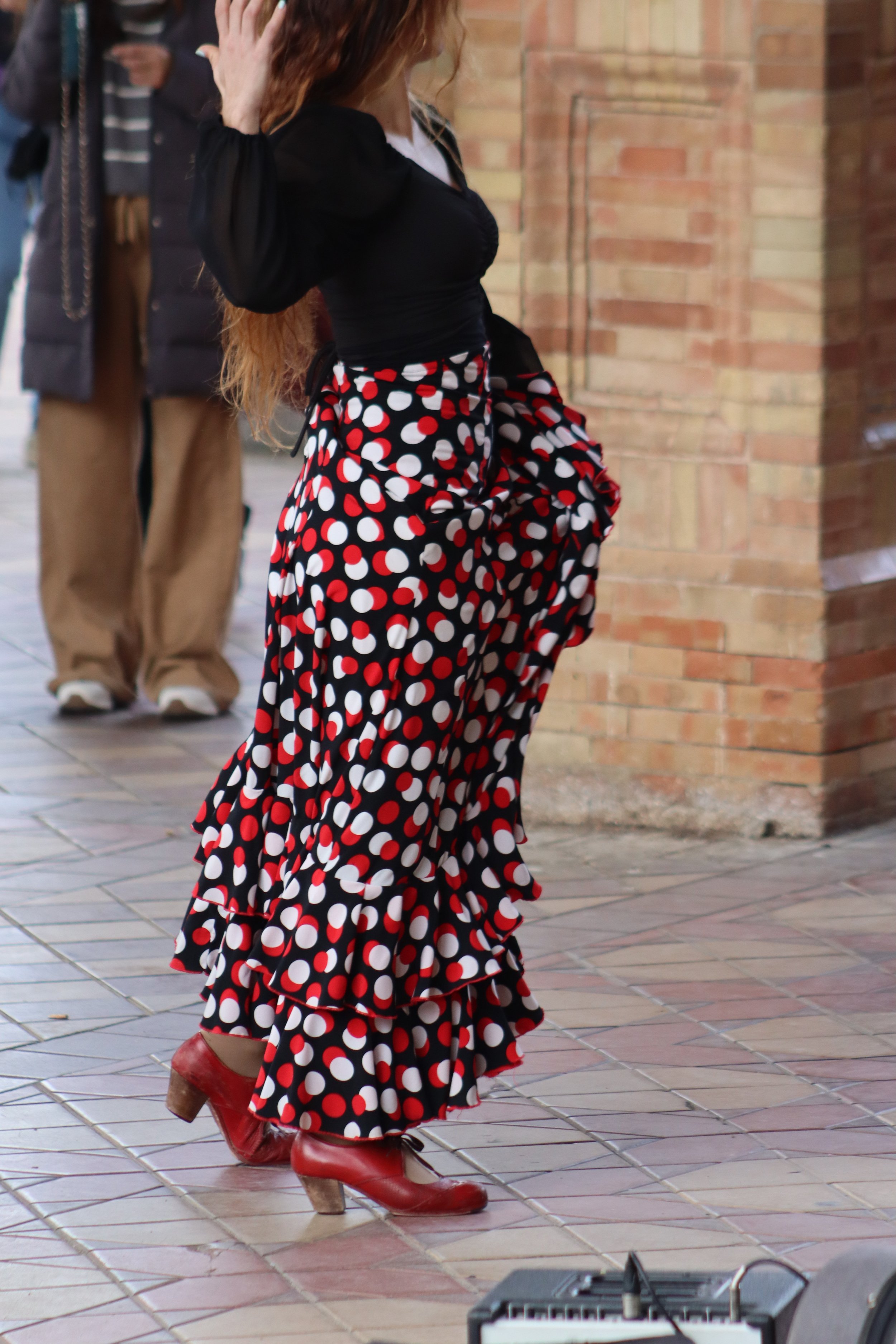
The quick click of castanets and stamping of feet is mesmerising to watch and you can experience it all over the city. Personally, to me the sound of the lone guitar evokes visions of Spain.
Our first experience was the street performing group in the gardens surrounding The Royal Alcázar, however we later encountered flamenco all over the region.
I have attached photographs below of a performance we stumbled across at Plaza De Espana, large crowds gathered round to witness the sensual dancer giving it everything on the tiles.
Las Setas de Sevilla (The Mushroom)
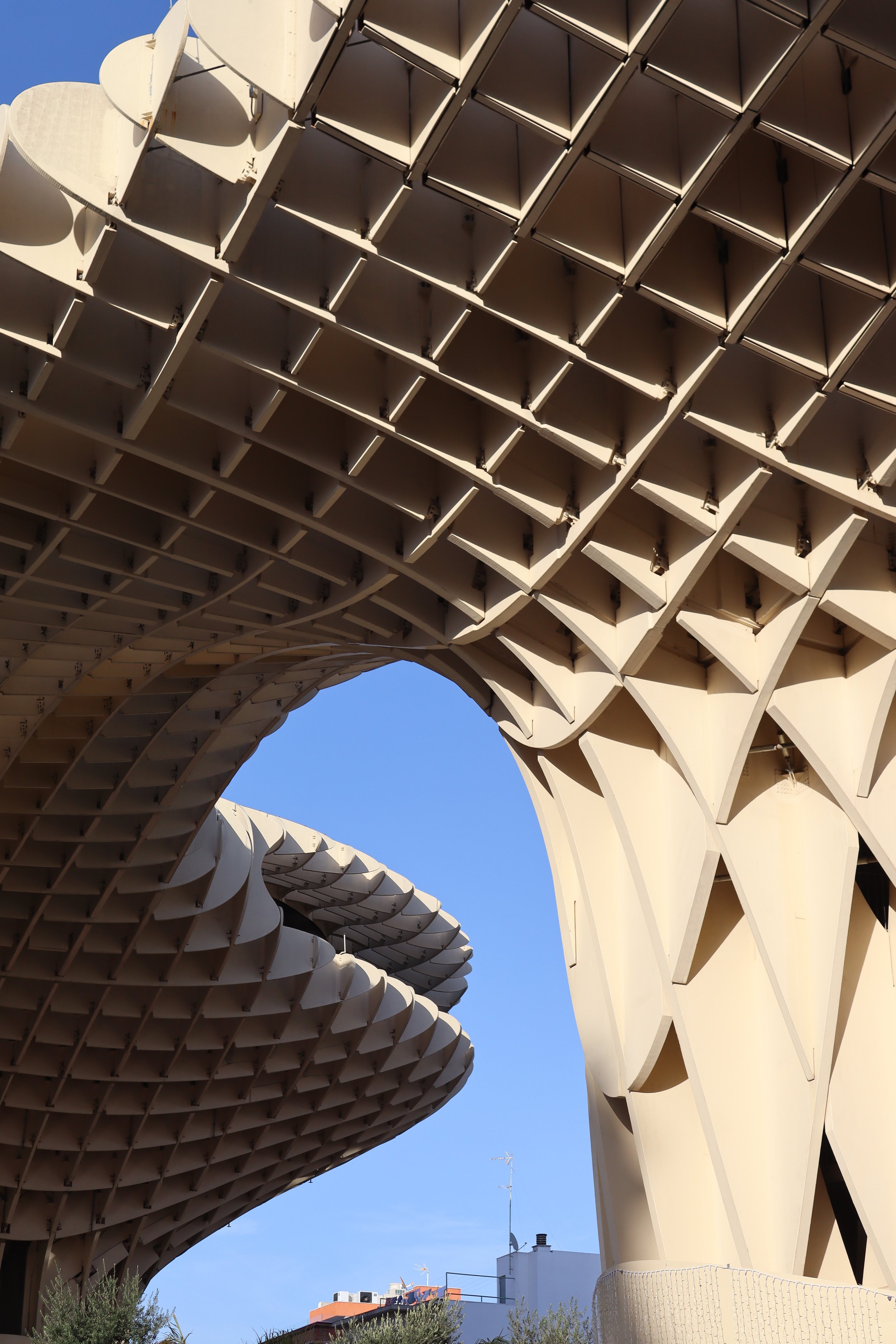
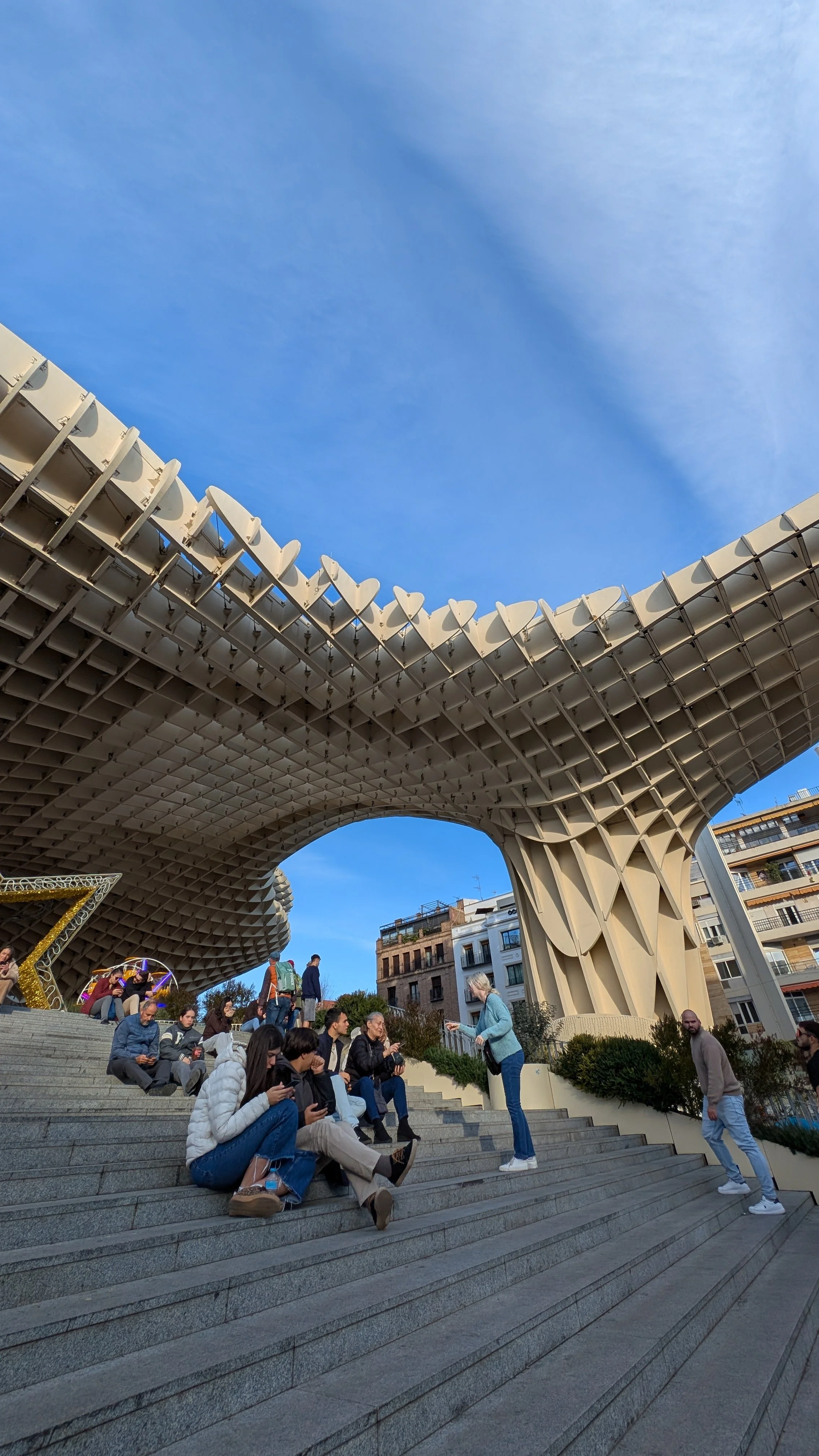
Situated in the Plaza de la Encarnación is Metropol Parasol, also known as the 'mushrooms of Seville'. The large wooden structure is the largest of its kind in the world and underneath is a contrasting ancient roman ruin.
The area originally was going to be the location for a bog standard car parking lot, however the Roman remains underneath were discovered deep underground and then became an area of impressive design and architecture.
The unique design was the winning project of the competition opened by the City Council of Seville and German architect Jürgen Mayer designed the structure off of the ficus trees of the nearby Plaza del Cristo de Burgos.
Two elevators will take you underneath the structure to the Antiquarian museum, which exhibits the archaeological finds - the Roman and Moorish ruins can be viewed for free though, through the glass windows (if you are cheapskates like us anyways).
Directly underneath the mushrooms during the festive months, there was a mini Christmas market and some small fairground rides. The area was busy and lots of locals were hanging around and socialising in the area. I did see online the building is also lit up at night.
If you are after fantastic views and want to capture the building behind the lens, then you can walk up to their viewing platform. Tickets can be pre-booked here.
If you are interested in quirky architecture and design then this is the place to visit. The other main reason for visiting this area was to see the convent nearby where the Nuns prepare delicious cakes daily…which leads me nicely on to the next highlight:
Dulces de Conventos
Within the walls of the Monasterio de Santa Ines are a group of 8 nuns who bake confectionery that you can buy. The nuns here sell their homemade sweets to support themselves and continue to live within their convents. The Convent of Sweets opened their doors promptly at 4pm in the afternoon - we knew we were in the right location as a few people gathered outside in anticipation. You can find the door at number five Dona Maria Coronel Street.
I will pin the location of the Convent here:
Once you walk through the ancient cloisters you will see a menu of their sweets and a hatch in the corner. Within the hatch is a lazy Susan type of turntable, called a torno, that is used to transport things back and forth between you and the nun. You talk and do all of the exchanges through the torno and never see the nun’s face. It’s all done on the honor system, which makes it even more special to participate in.
I was surprised by the menu and the variety and you should note - you don’t just buy one Magdalena, you get them in large quantities of 12.
We opted for a classic Magdalena sponge and they were great. If I remember correctly the bag was about 7 euros.
The convent only accepts cash and is closed on Sundays. They are open in the afternoon from 4pm-6pm.
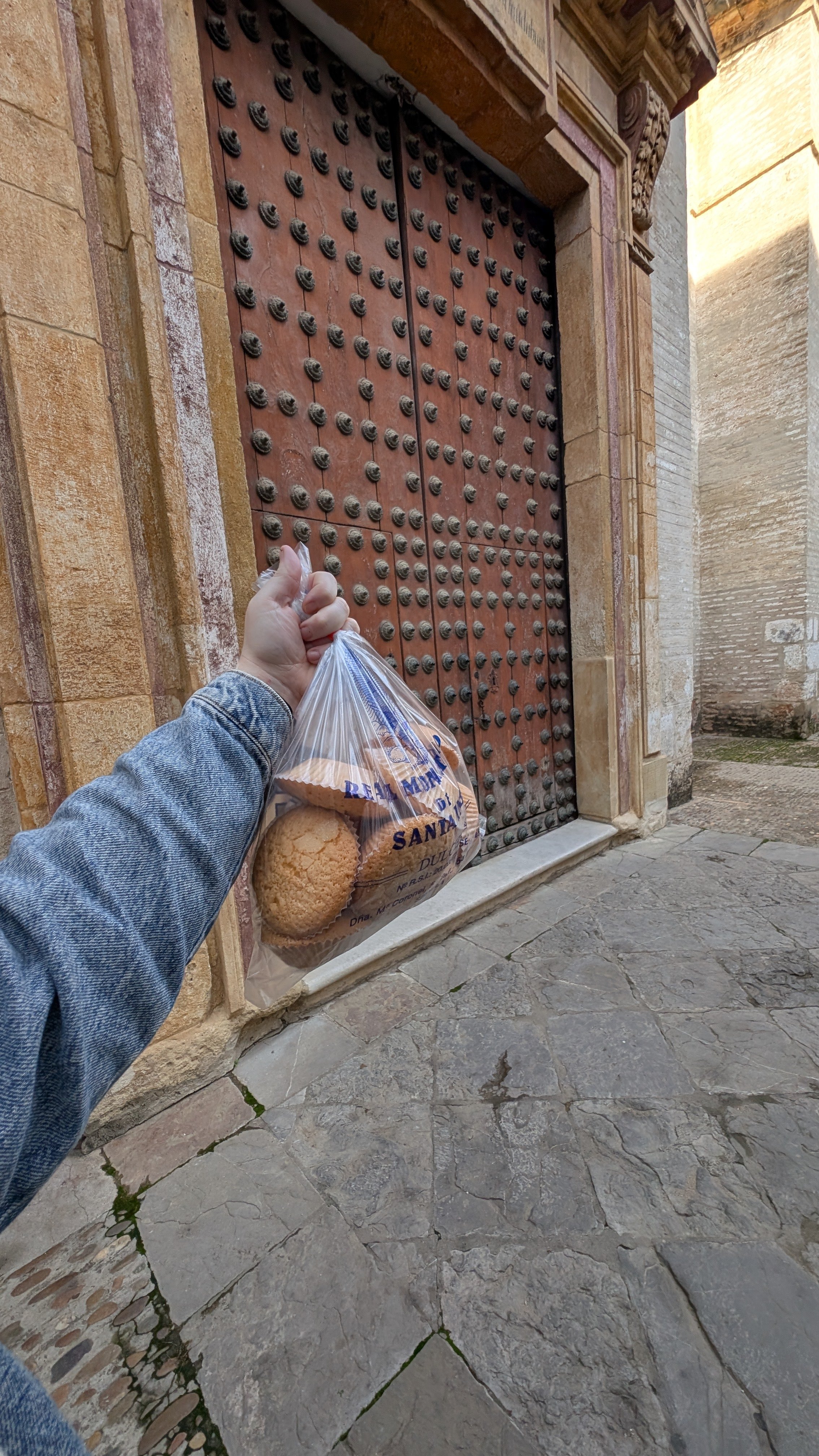
Secured the goods…
Plaza De Toros (Bull Ring)
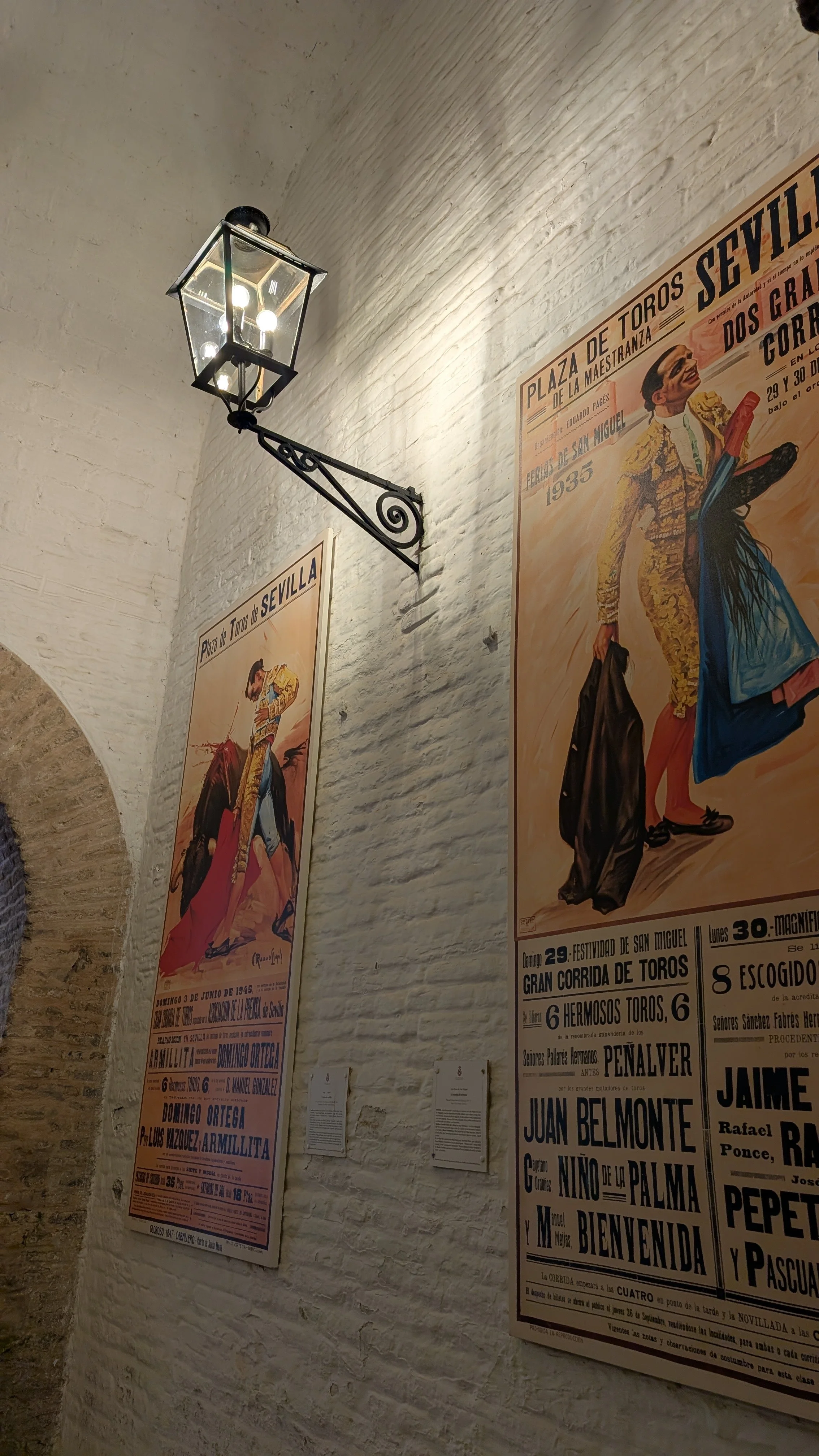
This next one might be controversial to some of you but I always try to experience and understand the places I visit through their culture and a large and important part of Spanish culture is bull fighting. Personally I don’t think I could sit through a live bull fight but the building itself and customs behind it were interesting.
The Plaza de Toros de Sevilla is the largest and most important arena for bullfighting in Spain. We honestly walked past this place by chance and I think it was my first sight of a bull ring. We were walking along the river walkway when we encountered statues of famous bull fighters.
The large oval arena was built in the 18th century and can accommodate 13,000 spectators. From the outside you can see the reds and yellows of the building which is designed that way to reflect the colours of the Spanish flag.
Inside the arena there is a dedicated museum where you can see all the famous bull fighters past and present and their beautifully ornate clothing they wear. The museum also has a collection of art work and the visit consists of a self-guided tour where you can explore the bullring and its main areas, such as the horse paddock, the bullfighters' chapel, and the arena itself. Along the way there were QR codes where you could listen to audio on your phone. In certain parts of Spain, bull fighting is seen as a part of cultural heritage, whereas in other places such as the Canary islands and parts of Catalonia it is often challenged with bans and restrictions.
Our visit didn’t take long and my understanding is that bullfighting season begins in the spring time (march).
I felt quite odd visiting, as did my husband as we don’t support the cruel sport but the place was nonetheless thought provoking.
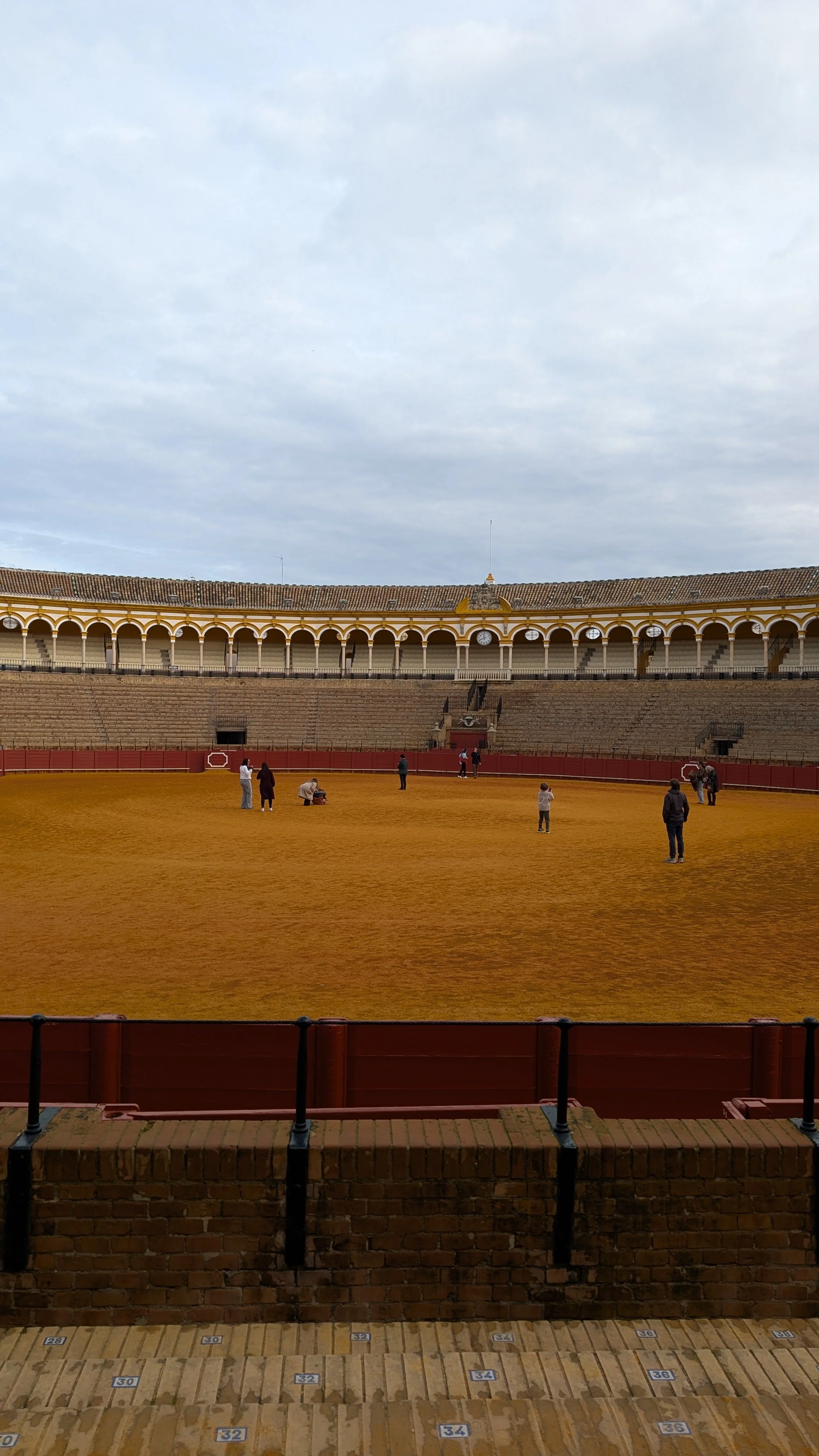
Inside the main arena: Plaza De Toros
Torre Del Oro (Tower of Gold)
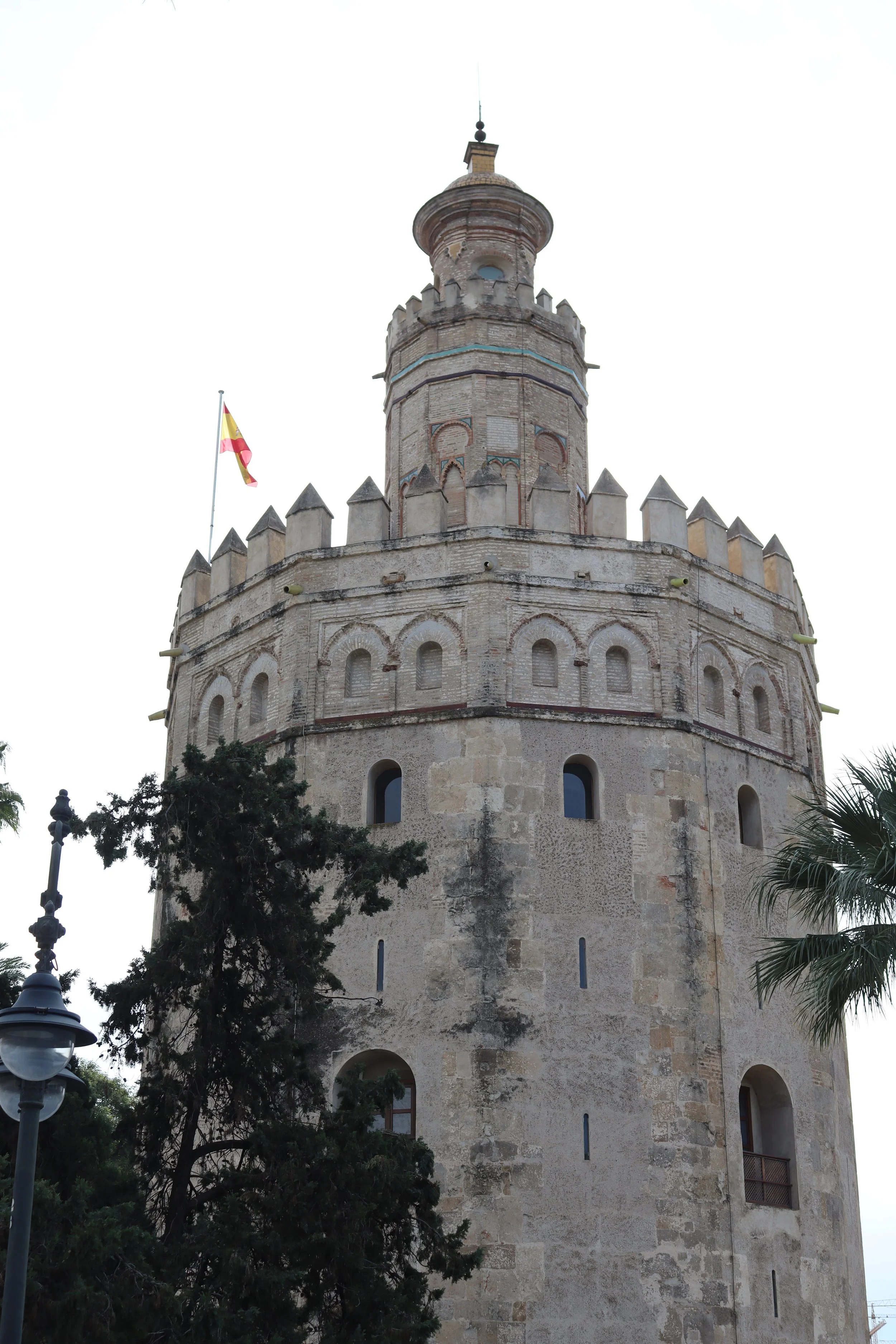
This historical defensive tower dates back to the 1220’s and is located on the banks of the Guadalquivir river. The 12 sided tower was originally built as a military watchtower and there would have been at one point a large heavy metal chain that would have stretched across the river to prevent enemy ships from entering. The name comes from the golden hue the building reflects in the sunshine.
Today, the tower is home to the naval museum which showcases the Spanish maritime achievements, and if you climb the 99 steps up to the top you’ll get good views. Entry is donation based and is open daily.
Eat Tapas:
The concept of tapas originated in Andalucía, with the word 'tapas' literally meaning to cover or use a lid. A piece of bread placed over a glass of sherry by workers in the field to keep insects away. Seville is the heart of it all and has over 300 tapas bars.
We tapas hopped a few places over the weekend, here are some true highlights:
Restaurante Casa Roman, Pl. Venerables, 1 Casco Antiguo.
Located just a five minute walk from the Royal Alcazar (Santa Cruz), this quite unassuming place served great tasting tapas.
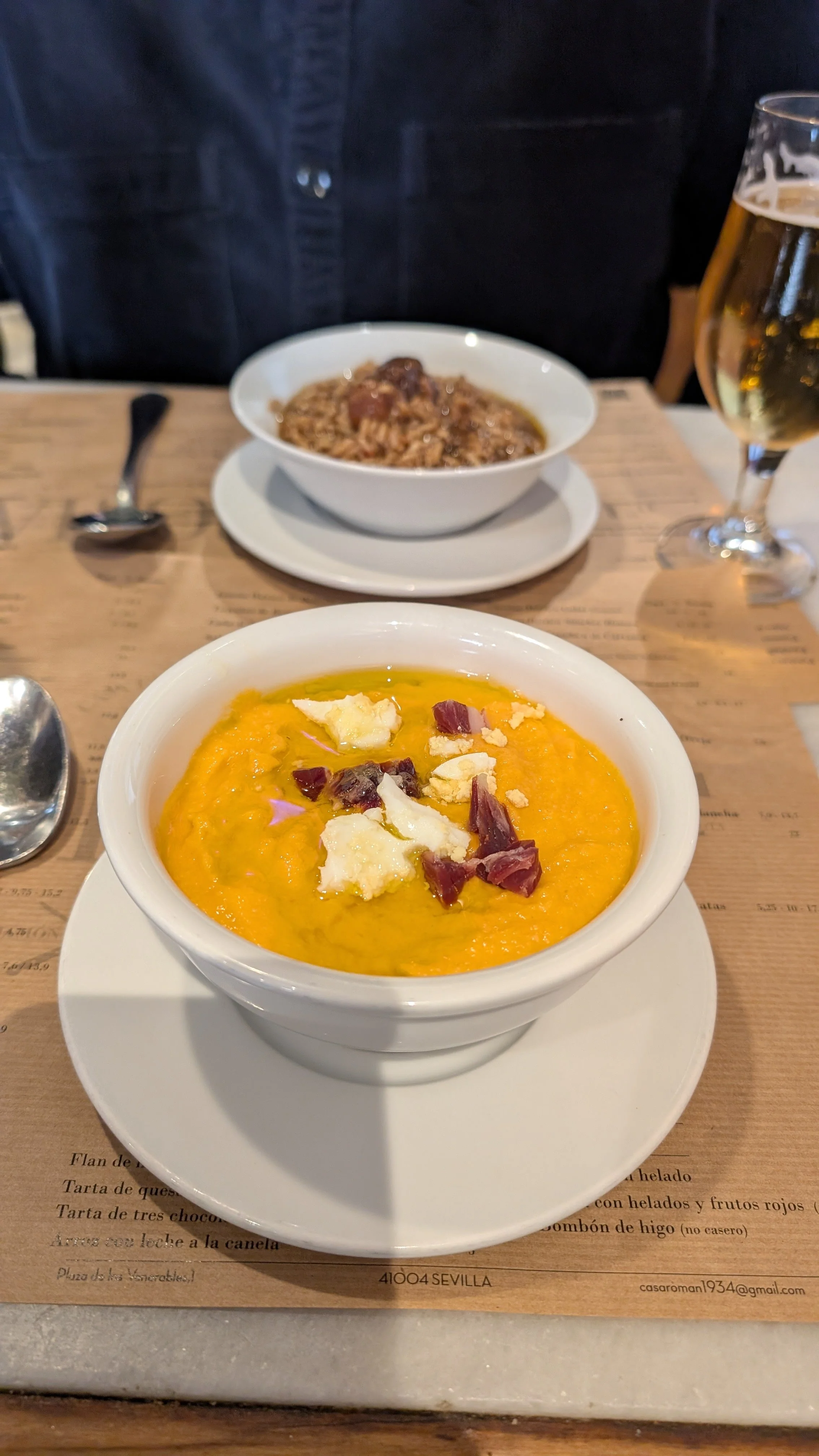
We tried a few traditional dishes but highlights were: their Salmorejo (Seville’s version of gazpacho) which was cold, creamy, thick tomato soup and served with crispy Iberian pork on top.
Because we visited during the weekend,their special menu item - Bulls tail risotto was on offer. I came across this dish while watching Eva Longoria’s “Searching for Spain” food travel show and was keen to try it. The risotto was rich and beefy and I would have again. We visited during the day and would go back again to try more of their menu.
Salmorejo soup
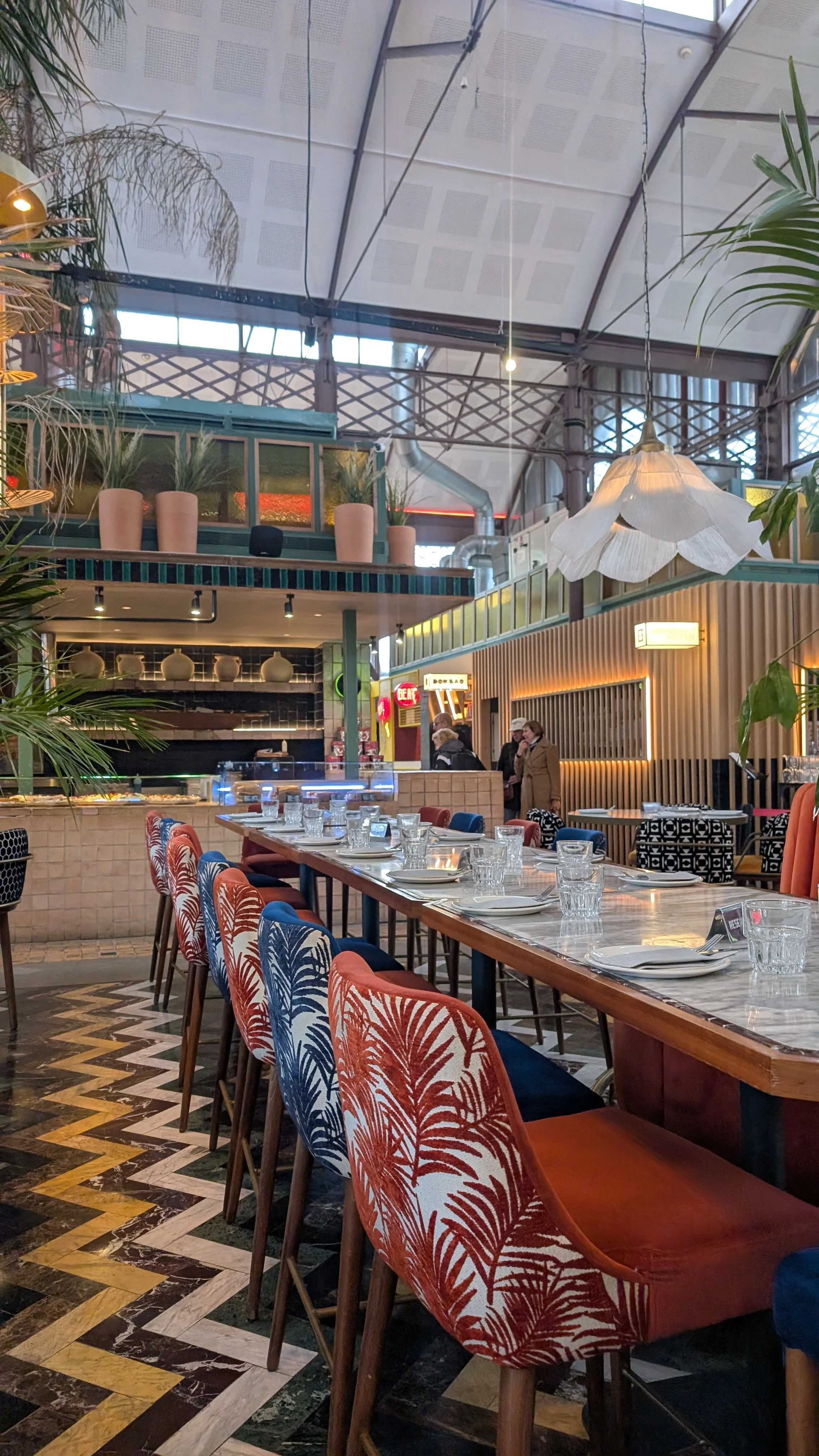
Another great place we stumbled across was just on the banks of the river, it was the Mercado Del Barranco, it is a stylish food court with many different food vendors to choose from. They had breakfast options, pastries, seafood, pizza, deli meats and tapas on offer.
They also had a dedicated cheese, salted fish area and paella station.
I found this place to look quite up market, but the actual price of the food was reasonable -there was outdoor seating too which was nice.
Mercado Del Barranco
Coffee Shops:
Since we were staying in the Triana area we went for coffee in the mornings, if you know me in person you know I am a true caffeine fiend and need a decent espresso in the morning. Two coffee shops worthy of mention were:
Selva Coffee They have small seating indoors and serve cakes too, they also offer smoothies, matcha and a selection of cold brews.
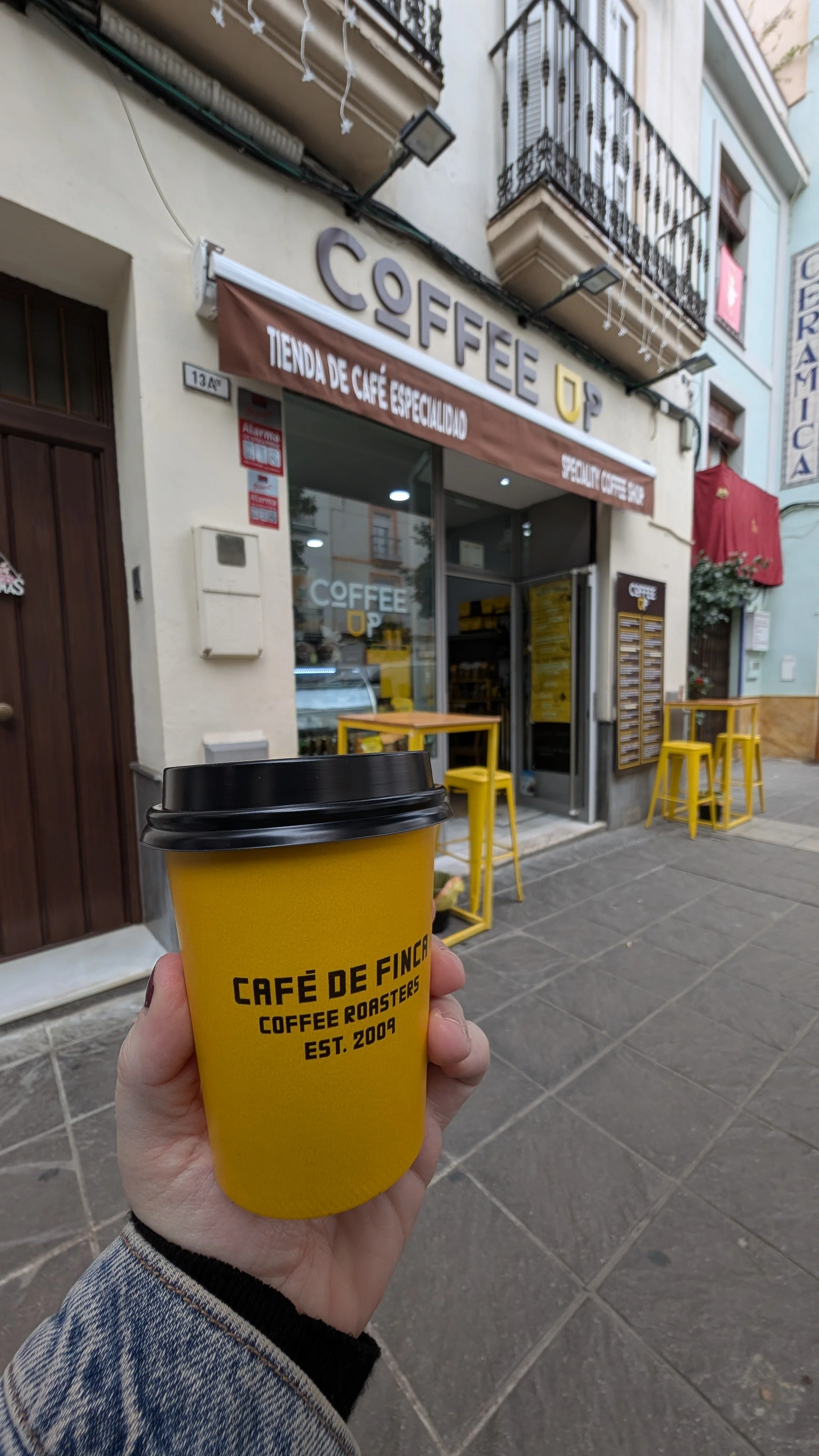
Coffee UP - They serve strong coffee and serve a small selection of cakes, cookies and filled croissants. Very limited seating indoors.
Seville at Christmas Time:
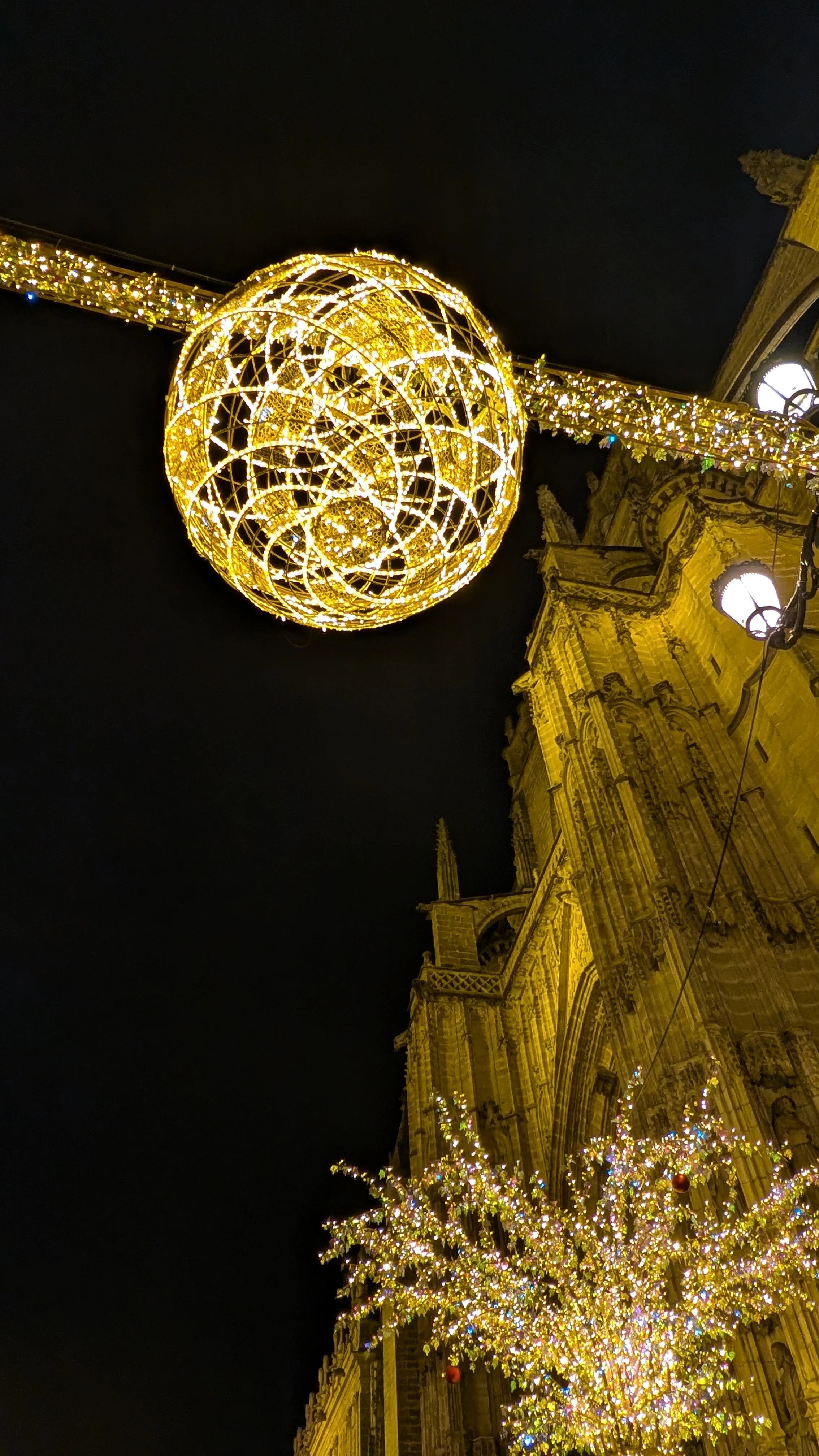
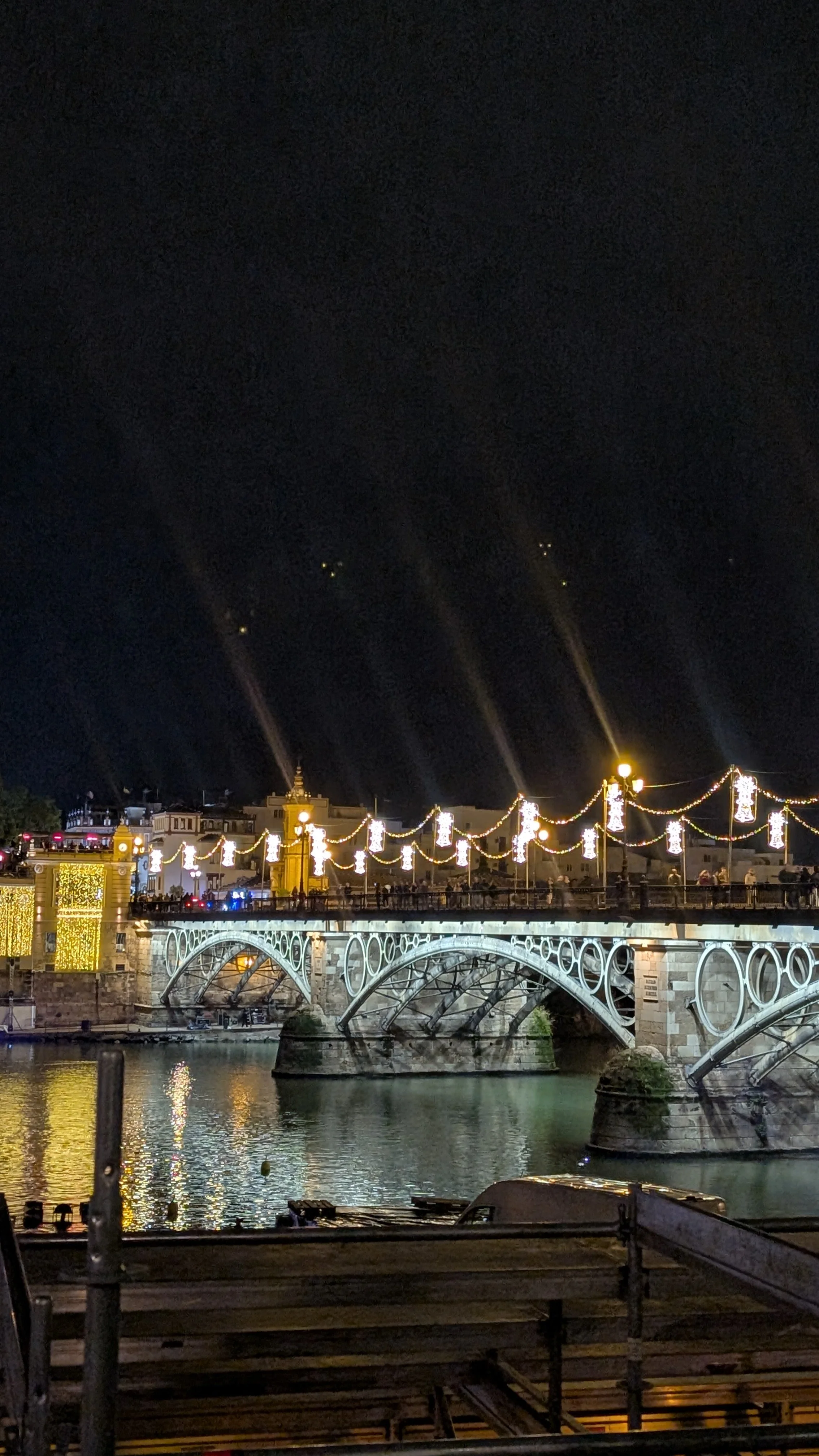
We visited during the lead up to Christmas, and I have to confess I didn’t expect Spain to be so festive. The streets of Seville, especially surrounding the cathedral, were lit up in a golden light. The glowing Christmas tree, the carol singers and the beautiful twinkling lights created such a festive glow.
The best lights were near the Seville Cathedral and in and around Plaza de San Francisco.
On many street corners there were smoking pits of roasted chestnuts, and a few Christmas markets dotted around the city.
This article is also featured on GPSmyCity. To download this article for offline reading or create a self-guided walking tour to visit the attractions highlighted in this article, go to Walking Tours and Articles in Seville.